No water from a well or cistern
With a well pump not working and no water, check house power, the pump breaker and the pressure gauge, look at any cistern from outside, then call a licensed professional.
No water, well or cistern
- Power elsewhere in the houseCHECK ANOTHER CIRCUIT
- Pump breaker or fuseCHECK
- Pressure gauge at the tankREAD AND WRITE DOWN
- Cistern level, from outsideLOOK, DON'T OPEN UP
- Pressure switchLEAVE ALONE
- Tank air valveLEAVE ALONE
- Well pit, cistern hatchSTAY OUT, DON'T LEAN IN
- No water or low pressure stillCALL A LICENSED PRO
- Use this when
- Every tap is dry or weak, and the house runs on a well or a cistern.
- Done when
- Water is back, or a licensed pump professional has the job.
- Who
- You, then a licensed pump installation contractor
Written for this manual, last checked against sources November 4, 2026. Who wrote it
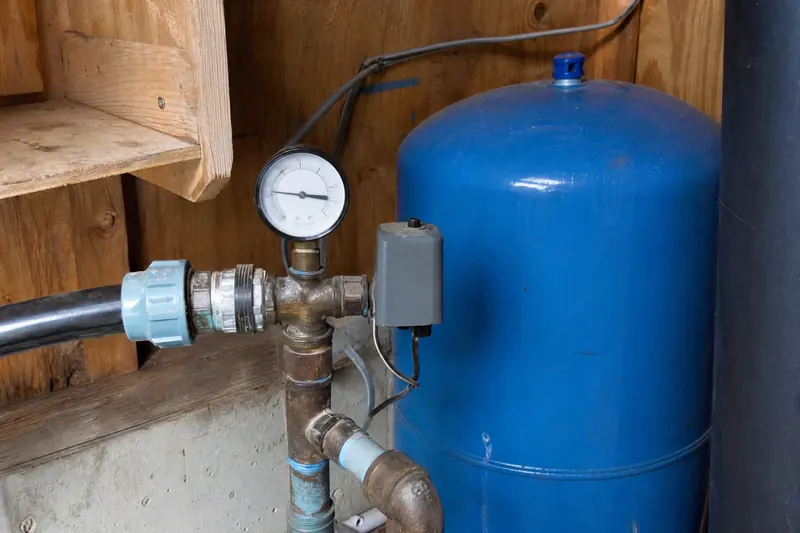
E-5.1 Checks on a well
The order comes from University of Nebraska Extension, from 2012 and not Colorado, but the checks are general: confirm power on another circuit, check the well pump breaker or fuse, then read the pressure gauge. If you still have no water or low pressure, call a licensed professional.
Look at the breaker without touching anything wet. If it has tripped, this manual's advice is to switch it fully off, then on, one time. If it trips again, leave it off and make the call. Do that only if the panel and the floor are dry.
The gauge gives the pro a head start. Write down what it reads, and whether you hear the pump.
E-5.2 What to leave alone
The pressure switch is connected to electric power and could cause serious injury, so don't adjust it. The tank's air valve is also a professional's. A tank maker's manual warns against adding pressure after a loss of air because a corroded tank could rupture. Pumps on a variable-frequency drive call for extra electrical caution, so leave the drive box closed. How the system works is in §2-2.
E-5.3 Checks on a cistern
This part is practical advice, since no official source covers it. Start with the simple question: when was it last filled? Then look from outside. Read a level gauge or float marker if the tank has one. Check for wet ground around the tank, and at the fill line, that might mean it has drained. Then run the same breaker check on the cistern's pump.
If the cistern has water and the pump has power, the problem is past what you can check. In a dry cistern, order water and read §3-2 first. Don't open the hatch to look down inside.
E-5.4 While you wait
Use bottled or other safe water for drinking. In freezing weather, the cause may be a frozen line, §E-4. If the power's out, the pump won't run until it's back. If water returns cloudy or smells odd, don't drink it, and read §2-3. If the wellhead has flooded, stay away from the pump because of the shock risk, and don't drink or wash with the water.
Where this comes from
- University of Nebraska Extension G2153, 2012: check order, stuck valve, pressure switch warning, drives.
- Amtrol Well-X1 installation manual: air valve left to licensed professionals, for one tank model.
- EPA, protect your home's water: flooded wellhead.
- CDC, disinfecting wells after an emergency: don't enter a well pit.
- C.R.S. 37-91-102 (published copy of the statute): pump installation contractor defined.
Sources checked November 4, 2026.