Furnaces and water heaters at altitude
A gas furnace at high altitude burns in thinner air, so its rating and burner setup must match your elevation, and that work belongs to a licensed professional using the maker's manual.
- Use this when
- You are replacing a furnace or gas water heater, a relief valve is dripping, or you want to know what's yours to maintain.
- Done when
- The installer has stated your elevation and output in writing, filters are on a schedule, and yearly service is booked.
- Who
- You for filters and a thermometer at the tap; a licensed professional for everything on the gas side
Written for this manual, last checked against sources November 4, 2026. Who wrote it
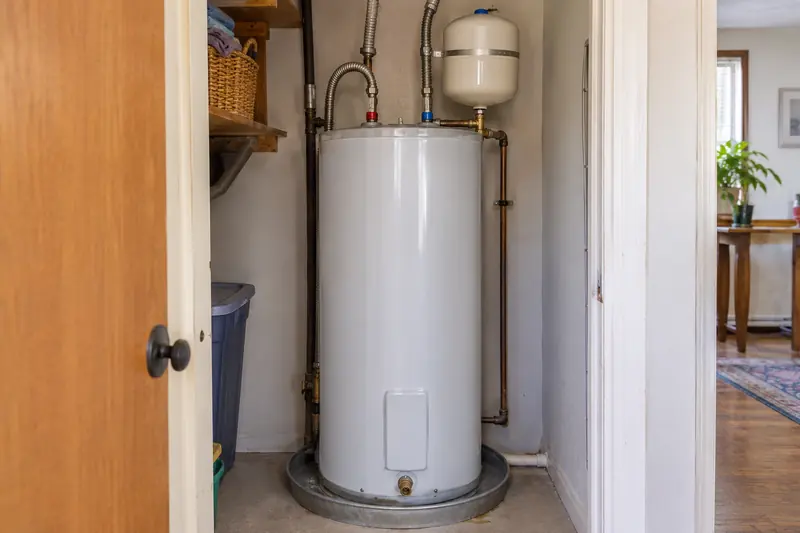
8-3.1 Why does a gas appliance lose output up here?
Air thins with height. One maker's manual, A.O. Smith's BT-65, explains that there is less oxygen per cubic foot as elevation rises, and that overfiring causes sooting and poor combustion. The cure is called derating, which means running the appliance at a lower input than the sea-level figure on its plate.
That manual holds its ratings up to 2,000 feet. Above that, it says "ratings must be reduced at the rate of 4% for each 1000 feet (305 m) above sea level." Its worked example takes a 65,000 Btuh unit to 54,600 at 4,000 feet and 49,400 at 6,000 feet.
Treat those as one model's figures. The BT-65 is a commercial-style water heater, and each appliance's own manual governs. This manual found no furnace maker's table it could cite, so don't apply the example to your furnace or run your own numbers. Get the figure from the installer, out of your unit's manual.
| Station | Elevation (feet) |
|---|---|
| Grand Junction Walker Field | 4,858 |
| Delta 3E | 5,027 |
| Paonia 1SW | 5,581 |
| Montrose #2 | 5,789 |
| Cedaredge 3E | 6,838 |
Those are weather stations, not towns, and Cedaredge 3E sits 3 miles east and may be above the town. All five are well over the 2,000-foot line, so assume yours is too and tell the installer your actual elevation.
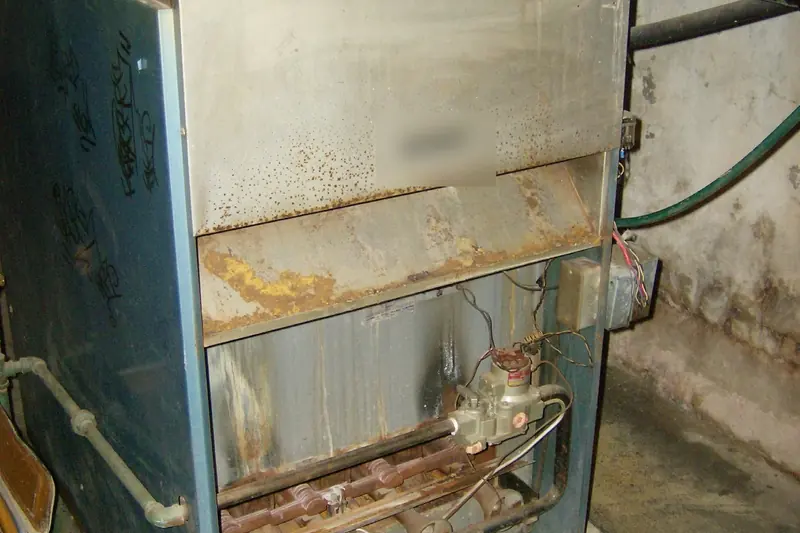
8-3.2 Why is setup a licensed job?
Getting it wrong can poison people. The same A.O. Smith manual says that above 2,000 feet burner parts must be changed as the National Fuel Gas Code (ANSI Z223.1, section 8.1.2) directs, and that failure can raise carbon monoxide above safe limits. Output falls too, so a unit sized from its sea-level number can come up short on a cold night.
Combustion air is part of it. CSU Extension says all oil and gas systems need combustion air and that the byproducts can be extremely hazardous. As ordinary good sense, don't store things against a furnace or water heater or block its air openings. Soot around a gas appliance is a reason to call a technician and to have §E-2 in mind.
Before you pay for a new unit
- Elevation used for the setupSTATED IN WRITING
- Output at your elevationSTATED IN BTUH
- Burner parts per the manualCONFIRMED
- Permit and inspectionPULLED AND BOOKED
- CO alarms at each bedroomIN PLACE
- Expansion tank needed or notANSWERED
Colorado's rules on who may do what sit in §10-2. In short, Colorado's regulator said in a December 4, 2025 addendum that homeowners may install or replace a domestic water heater on their own home if it isn't for sale, resale, a flip or a rental, and they must still get a permit and inspections. Separately, and as this manual's own advice and not the law: leave the gas connection and the venting to a licensed professional.
A permitted fuel-fired appliance replacement also brings in the alarm rule, as published in Colorado's statutes: an operational CO alarm within fifteen feet of the entrance to each sleeping room, or where a building code specifies. In Mesa County, the sample inspection card from 2023 lists separate lines for water heaters, furnaces, gas piping and venting, and forbids concealing work before inspection.
8-3.3 What should the water heater be set to?
120°F is the number. DOE calls it safe for most of the population, CSU Extension uses the same figure and says to check it at the nearest faucet, and the A.O. Smith manual calls it the preferred starting point, adding that hotter raises scald risk.
Your part is the check. Run the hot tap closest to the heater and hold a kitchen thermometer in the stream. If it's far from 120°F, ask the technician to change it at the next service. On many gas units the dial is part of the gas control, and this manual leaves that alone.
8-3.4 Expansion and the relief valve
Hot water expands, and in a closed system it has nowhere to go. The A.O. Smith manual says a check valve, pressure reducer or meter without bypass makes a closed system, and that the excess pressure can cause tank failure or a weeping relief valve. An expansion tank or similar device may be required. Clifton Water District notes that a dual check yoke may call for a thermal expansion tank, so ask your water provider too.
8-3.5 Filters and the yearly visit
Check the filter monthly and change it on the filter's schedule, within one to three months in the heating season. As ordinary practice, set the furnace's switch to off first, note the arrow on the old filter, and match it with the new one.
Book a yearly check by a trained professional. CDC asks for the same yearly service on heating and water heating equipment. Ask at that visit about sediment in the tank too, because draining hot water carries a scald risk.
Moving picture for §8-3
What Is A Thermal Expansion Tank? - Amtrol Tech Takes, posted by Amtrol Inc.. From the tank maker, Amtrol, and it names its own history. It explains, and it isn't about altitude. Fitting one is plumber's work, and a dripping relief valve is a call to a plumber. The still picture sits on this site; nothing comes from YouTube until you press Play.
Linked from this manual
- Water heaters. The water heater category, for comparing models with your installer. Read each model's altitude section first. This manual’s team is connected with PlumbingSupplyAndMore.
- Expansion tanks. Expansion tanks, listed under hydronics. Have your plumber confirm that any tank fits a drinking-water line before buying. This manual’s team is connected with PlumbingSupplyAndMore.
Also asked
Will a furnace bought from out of state work at 5,000 feet?
Only if it's set up for the elevation as its manual directs. Hand the installer the manual, and ask which altitude section applies and what the output will be. If they can't point to it, keep asking before you sign.
Can I replace my own water heater in Colorado?
As of the December 4, 2025 addendum, a homeowner may on a home that isn't for sale, a flip or a rental, with a permit and inspections. This manual's advice stays the same on a gas unit: hire out the gas connection and venting. See §10-2.
Does my furnace need an inspection when it's replaced?
Plan on asking. Mesa County's sample card lists one, and §10-1 covers what's known for Delta and Montrose counties, where the offices' own pages couldn't be opened when this was last checked.
Where this comes from
- A.O. Smith, BT-65 instruction manual: derate wording and example, burner parts and CO, oxygen, relief valve, expansion, 120°F. One commercial-style model.
- NOAA NCEI, 1991-2020 normals, station data: station elevations, converted from metres.
- CSU Extension, Heating Colorado Homes: combustion air, filters.
- CSU Extension, energy checklist for homeowners: 120°F at the faucet, yearly furnace check, filters.
- DOE, Energy Saver guide, 2022: 120°F.
- CDC, carbon monoxide: yearly service.
- Colorado DORA, addendum of December 4, 2025: homeowner water heater rule.
- C.R.S. 38-45-102 (published copy of the statute): CO alarm rule when a fuel-fired appliance is replaced under permit.
- Mesa County, sample inspection card, 2023: inspection lines, no concealing work.
- Clifton Water District, cross-connection and backflow: dual check yoke and expansion tank.
Sources checked November 4, 2026.