Contents Chapter 7. Freeze protection
Leaving the house for winter
To winterize house plumbing in a vacant home, choose one route, either heat at 55°F or more with someone checking daily, or water shut off and lines drained with a plumber's help.
- Use this when
- The house will sit empty for more than a few days between now and spring.
- Done when
- One route is finished, your checker has the card, and you have a written plan for coming back.
- Who
- You, then a licensed plumber for a full drain-down
Written for this manual, last checked against sources November 4, 2026. Who wrote it
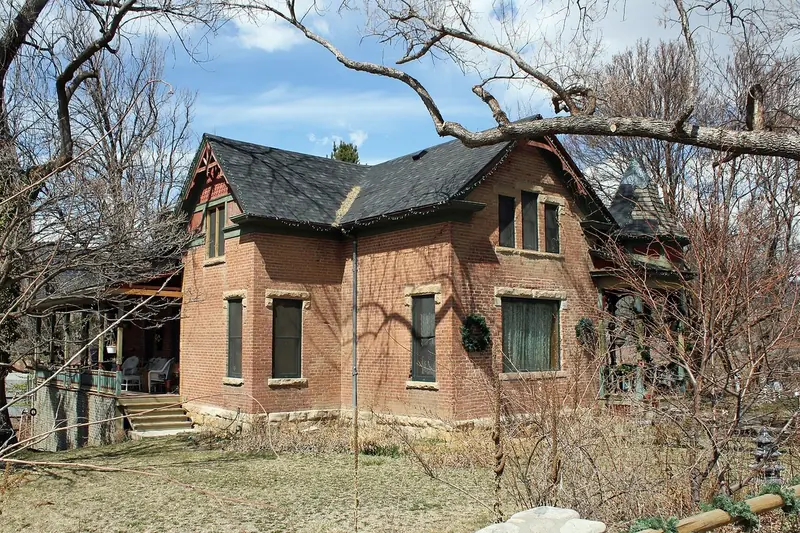
7-3.1 Which route fits your house?
There are two, and half of each protects little. Illinois Extension says to keep the heat on at no lower than 55 degrees and have someone check daily, or drain and shut off the water, with an exception for indoor sprinkler systems. CSU says unoccupied areas should still be heated to well above freezing.
Sources for empty homes are thin, and this manual says so plainly. No source could be opened that gives a homeowner's drain-down procedure for house lines. The closest is an IBHS bulletin from November 2019, written for commercial buildings only. It sets a 55°F minimum, monitoring to stay above 40°F, shutting off domestic water and draining lines. Read it as a pointer for a house, not a rule.
| Heat and check | Shut off and drain | |
|---|---|---|
| Heat | On, 55°F or more | A plumber's call for your house |
| Water | Can stay on | Off and lines drained |
| Daily visit | Yes, by someone who knows the card | Still worth a regular visit |
| Fuel | Must last the whole absence | Ask your supplier |
| Who does it | You | You, then a plumber |
| Weak point | Heat failure in a cold snap | Water left in low spots and traps |
January normal lows at the stations in §1-3 run in the teens, so a few days without heat is not a small risk.
7-3.2 Route one: how do you keep the heat and check it?
Treat it as a job someone else must be able to do from a card. Do the §7-1 check first, then run the list below. Open cabinet doors, as IBHS advises, so room heat reaches pipes on outer walls.
Before you lock up, heat route
- Thermostat55°F OR HIGHER
- Cabinets on outer wallsOPEN
- Propane tank gaugeREAD, FILL IF LOW
- Delivery for the absenceARRANGED
- Tank and walkwayPLOWING ARRANGED
- Heating systemSERVICED THIS YEAR
- CO and smoke alarmsTESTED
- Main shutoffSHOWN TO THE CHECKER
- House cardWITH THE CHECKER
Fuel is the quiet failure. A gauge reading below 20% means call your retailer, and PERC warns that running out can create fire or explosion hazards and put out pilots. A pilot that has gone out goes to a qualified technician, not you or your checker. Ask your supplier about a regular delivery schedule and tell them the house is empty.
Your checker walks through the same way each day: read the thermostat, look under sinks, look at the ceiling below any upstairs bathroom, listen for running water. Outside, look at vents for snow. CPSC says to clear snow from outside vents for furnaces and similar appliances. Around propane equipment, use a broom on loose snow only, touch nothing, and call the supplier if anything looks wrong. See §8-1.
7-3.3 Route two: what does draining involve?
It means shutting the water at the main and getting it out of every line, which is harder than it sounds. Follow the shutoffs in §1-2, then open faucets to let the lines empty. Toilets, traps, the water heater, softener and pressure tank all hold water, and no source gives this manual a tested method for them.
Hire the drain-down if you aren't sure of it. Ask the plumber to walk you through what was done, write it on your card, and leave the restart steps with you. The well pump breaker is yours to find (§1-2). The tank's air valve belongs to a licensed professional, and so does the pressure switch, which is connected to electric power.
7-3.4 Coming back in spring
Start slowly, and go through the house with someone else if you can.
- Walk the house before any water goes on. Look for stains, wet spots and a smell of gas. A gas smell means §E-1.
- Have a technician start any appliance that was shut down.
- Open the main a little at a time, with someone watching the fixtures.
- Stored water needs its own step. CDC's cistern page covers disinfecting a treated-water cistern after a long absence, set out in §3-3.
- If you are on a well, spring is CDC's time to check it for mechanical problems. Testing is in §2-3.
Also asked
Should I just turn the heat down low to save money?
Don't go under 55°F, the floor Illinois Extension and IBHS both use. Pipes on outer walls run colder than the thermostat reads. Fuel and a daily visit are the cost of this route.
Do I need to tell my insurer the house is empty?
No source on this was opened for this manual. Read your policy's vacancy wording and ask your agent before you leave, since a freeze claim is the wrong moment to find out.
Can a neighbor check once a week instead of daily?
The Illinois Extension wording is daily. A week is a long time for a stopped furnace in January. A temperature alarm that texts you can help, but it doesn't turn off water or find a leak.
Can I leave the swamp cooler and irrigation line as they are?
No. Winterize the cooler (§9-2) and shut down the line (§5-2) before you go. Both are outside the house's heat.
Where this comes from
- Illinois Extension, water pipes: heat or drain, daily check, sprinkler exception.
- CSU Extension, heating Colorado homes: unoccupied areas.
- IBHS commercial bulletin, November 2019: vacant commercial buildings only.
- IBHS, after the event: cabinet doors.
- PERC general manual, republished by Iowa: gauge, running out, pilots, snow. This document also has a tank-valve step that this manual leaves out on purpose.
- CPSC release, February 19, 2026: clearing snow from vents.
- Amtrol Well-X1 manual: one tank model, professionals only on air charge.
- Nebraska Extension G2153, 2012, not Colorado: pressure switch warning.
- CDC, cistern safety: after a long absence.
- CDC, testing well water: spring well check.
Sources checked November 4, 2026.