Contents Chapter 3. Cisterns and hauled water
Keep a cistern clean from outside
Cistern cleaning and disinfecting starts outside the tank, with CDC's dose of 3 cups of unscented bleach per 100 gallons when treatment is called for, and anything that means going inside goes to a trained crew.
- Use this when
- Officials tell you to treat a cistern, the house has been empty a long time, or the tank is due for a look.
- Done when
- The tank has been treated or inspected from outside, the water has been flushed through, and a lab sample has come back.
- Who
- You from outside the tank, then a trained crew for anything inside
Written for this manual, last checked against sources November 4, 2026. Who wrote it
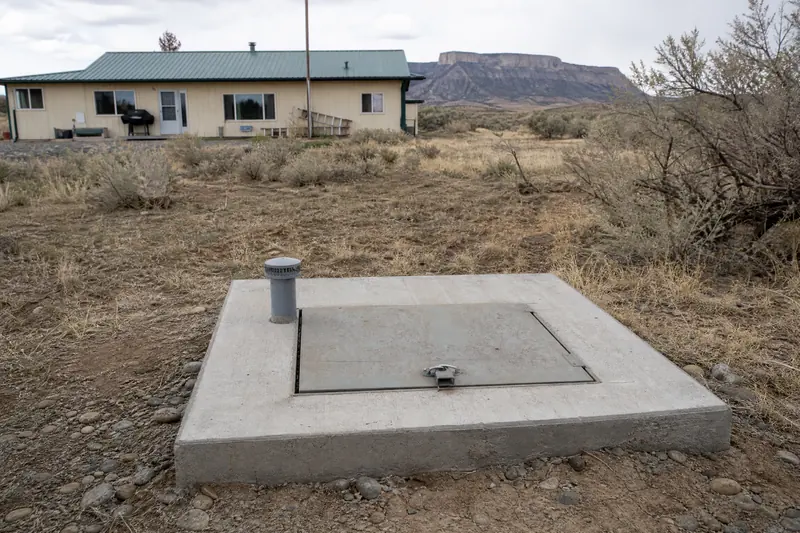
3-3.1 Why must nobody go inside a cistern?
The air can kill, and it gives no warning. NIOSH lists storage tanks, septic tanks and utility vaults as confined spaces. Its examples include a plumbing contractor who collapsed entering an underground water-line vault to inspect a backflow device, and a supervisor who went in after him and also died. Both entered an untested oxygen-deficient atmosphere.
CDC's cistern page allows scrubbing "if you can do it safely." This manual's ruling is stricter. Entering is a job for a trained crew, and that covers empty tanks, shallow tanks and quick looks.
3-3.2 When should you disinfect a cistern?
Treat when officials tell you to, or after an evacuation or a long absence. Those are the triggers in CDC's cistern guidance for a treated-water cistern. That page gives no routine maintenance schedule and no water-testing steps, so a fixed yearly date isn't something this manual can source.
Disinfecting a treated-water cistern
- Fuel or chemical smellDON'T TREAT, DRAIN FULLY
- Flooded catchment tankASK HEALTH DEPT FIRST
- BleachUNSCENTED, 5-9%
- Dose3 CUPS PER 100 GALLONS
- YouOUTSIDE THE TANK
- House on septicASK HEALTH DEPT FIRST
- Each faucetRUN TO CHLORINE SMELL
- HoldAT LEAST 12 HOURS
- Drained waterNEVER INTO SEPTIC
- TankREFILL, THEN FLUSH
- Water sampleSEND TO A LAB
| Tank size | Unscented 5-9% bleach |
|---|---|
| 200 gallons | 6 cups |
| 450 gallons | 14 cups |
| 600 gallons | 18 cups |
| 1,000 gallons | 30 cups |
If your hatch can't be reached without leaning over the opening, hire the job. That's practical advice, and it comes before the bleach. Keep bleach away from anything else as well. Mesa County's procedure, written for wells, says never to mix chlorine with acids or ammonia, and not to chlorinate carbon filters. Ask your filter's maker what to do with a cartridge before the chlorine reaches it.
3-3.3 Where does the chlorinated water go?
Not into a septic system. CDC says to drain to a sanitary sewer, and Mesa County's well procedure says not to flush chlorinated water into septic and to avoid draining it onto lawns. Most rural houses have no sewer connection, so ask the county health department where it wants the water to go before you start, and plan the job around that answer.
3-3.4 What makes treating pointless?
Two cases, and CDC is plain about both. With fuel or toxic chemicals in the tank, treating won't make the water safe, so the tank has to be drained fully. In a flooded untreated catchment cistern, disinfecting "does not work well," so ask the health department first.
3-3.5 What can you check from outside?
Quite a lot, and none of it means going in. This list is practical advice built on Mesa County and CDC. Look at it when you log a delivery (§3-2), and after storms.
- Hatch closed and sound, with no gaps a mouse could use.
- Vent clear and undamaged.
- Leaves, soil and animal mess cleared from around the hatch.
- Runoff directed away from the hatch and fill port.
- Tank level as you'd expect it, read from outside.
- A sample through a lab. Mesa County's Regional Lab lists a coliform test for cisterns.
Also asked
How often should a cistern be cleaned?
CDC's page gives no routine schedule, and this manual found no official one. Use outside checks and lab samples as your guide, and let a trained crew judge sediment.
Can I use scented or splash-free bleach?
CDC specifies unscented 5-9% bleach. Read the label, and don't substitute a product that doesn't match.
Is it safe to go in if the tank is empty and the hatch is open?
No. NIOSH's listed deaths came from untested air in confined spaces, and an open hatch doesn't prove the air inside is fit to breathe. Hire a trained crew.
What do I do with the water filter during treatment?
Mesa County says not to chlorinate carbon filters. Take the question to the filter's maker or your installer before you add bleach.
Where this comes from
- CDC, cistern safety and disasters: when to treat, bleach dose table, 12-hour hold, fuel and flood limits.
- NIOSH publication 87-113, confined spaces: tanks and vaults as confined spaces, the vault deaths.
- Mesa County shock chlorination procedure, created 2019: chlorine cautions and disposal, written for wells.
- Mesa County Regional Lab: cistern water testing.
Sources checked November 4, 2026.