Contents Chapter 1. Know your house
Fill in your house card
This rural house systems checklist for Colorado is a one-page card: what your water, heat, cooling, ground and septic are, and the numbers you'll want when something goes wrong.
- Use this when
- You've just moved in, or you can't say what your house runs on.
- Done when
- The card is filled in, printed and taped where everyone can find it.
- Who
- You
Written for this manual, last checked against sources November 4, 2026. Who wrote it
1-1.1 What goes on the card?
The card holds what a stressed person needs and what a stranger on the phone will ask. Most Slope houses differ from each other in ways that change every other page of this manual: a well or a cistern, propane or natural gas, ditch water or none. Fill in what you know today and mark the rest as a question. A blank tells you which section to read next.
| System | Yours | Read |
|---|---|---|
| Water source (town, well, cistern, hauled) | §4-1, §2-1, §3-1 | |
| Main water shutoff, where it is | §1-2 | |
| Pump breaker, panel and number | §1-2 | |
| Irrigation (ditch, company, none) | §5-1 | |
| Heat (propane, natural gas, wood, heat pump, electric) | §8-1 to §8-4 | |
| Water heater (gas, propane, electric) and its age | §8-3 | |
| Cooling (swamp cooler, central, mini-split, none) | §9-1 | |
| Ground (swelling soil noted in any report?) | §6-1 | |
| Wastewater (sewer or septic), tank location | §6-3 |
| Who | Number | Used for |
|---|---|---|
| Emergency | 911 | Fire, gas, CO, injury |
| Propane supplier | Gas smell, low tank, deliveries | |
| Gas utility emergency line | Gas smell. It's on your gas bill | |
| Electric utility | Outages, wet panel. It's on your bill | |
| Water provider or hauler | Town outage, fill-ups | |
| Well permit number | Sale, repairs, §2-1 | |
| Pump installer | No water, §E-5 | |
| Plumber | Burst pipe, §E-3 | |
| Heating technician | Yearly service, pilots | |
| Ditch company or ditch rider | Shutdowns, §5-2 |
1-1.2 How to fill it in
- Walk the house with a flashlight and this page. Don't open anything that isn't meant to be opened.
- Pull your last bill from each utility. Copy the emergency line and the account number.
- Read the propane tank's paperwork or the delivery ticket for the supplier's name.
- Find the well permit, and copy the number and what it allows.
- Mark the main shutoff and pump breaker with tags, and test them with §1-2.
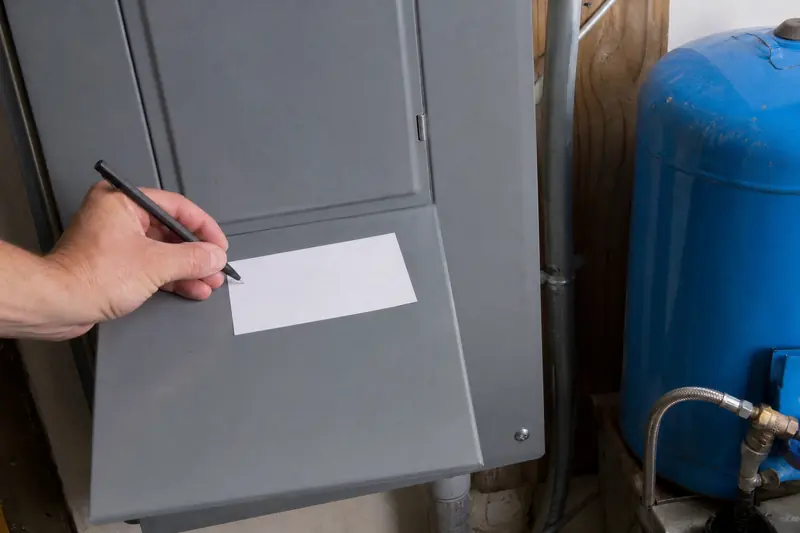
- Print the card, tape one copy inside a cabinet near the main shutoff, and keep a photo of it on every phone.
- Show adults and older children where the shutoff is. Utah State University Extension says to teach them how to use it.
1-1.3 Why does the well permit number matter?
Because many rural wells may be used for less than owners assume. CSU Extension says many rural wells are household-use-only, so you need to know what yours is permitted for. It also says most wells drilled on or after May 8, 1972 on properties under 35 acres are permitted for household use only, with no gardens or livestock. Your own permit controls, and §2-1 explains how to read it.
A 2009 flyer from the state's water division says domestic permit numbers generally have five or six digits with no "-F" suffix. That's old, so treat it as a hint. As published in Colorado's statutes, the holder of an unexpired permit must file a name or contact change with the state engineer within 63 days.
1-1.4 Three blanks worth chasing
Ditch rights. A ditch crossing your land doesn't mean you may use its water. Check your deed and ask the company, §5-1.
Swelling soil. Grand Junction, Montrose, Delta and many smaller towns sit on swelling formations, according to a 1978 Colorado Geological Survey guide. The survey says only a soil engineer or engineering geologist should identify them, so look for a soils report in your closing papers. See §6-1.
Septic. EPA says to inspect at least every three years and pump household tanks every three to five. Write the last pumping date on the card. See §6-3.
Also asked
Where do I find my propane supplier's emergency number?
Look at your latest delivery ticket or invoice, or the supplier's sticker on the tank if there is one, reading it without touching any fittings. If you have neither, ask the supplier by phone during business hours and write it down. In a gas smell, you can still call 911 from outside, §E-1.
My gas bill has several numbers. Which goes on the card?
Copy the one the bill labels for emergencies or gas leaks. This manual couldn't confirm any utility's emergency line in November 2026, so it won't print one, and your bill is the reliable source.
I rent. Should I still fill this in?
Yes, and add the owner's or manager's number. In a Colorado rental, the tenant tests and maintains CO alarms and notifies the owner in writing about faults, as published in the state's statutes. Other repairs go through the owner, so note who approves them.
I can't find any well permit in my papers. What now?
Ask the state's Division of Water Resources, which issues them. Its pages wouldn't open when this was last checked, so this manual can't give you a current search link. A title company or the seller may also have a copy.
Where this comes from
- Utah State University Extension, frozen pipes: teach the household the main shutoff.
- CSU Extension, water resources: household-use-only wells, ditch on your land.
- CSU Extension Gilpin County, water law and gardens: household-only permits since 1972.
- Colorado water division flyer, 2009, on a CSU site: what a domestic permit number looks like.
- C.R.S. 37-90-143 (published copy of the statute): 63-day update filing.
- C.R.S. 38-45-104 (published copy of the statute): tenant duties for CO alarms.
- Colorado Geological Survey SP-11, October 1978: swelling formations by town.
- Colorado Geological Survey, expansive soil: who should identify it.
- EPA, caring for a septic system: inspection and pumping intervals.
Sources checked November 4, 2026.