Contents Chapter 4. Water at the tap
Hard water on the Western Slope
Hard water around Grand Junction and the Slope shows in provider figures, with Project 7 averaging 128 mg/L in 2025 and Ute 150 mg/L in 2026, both in the USGS hard class.
- Use this when
- You see scale, are thinking about a softener, or want to compare your water with the classes.
- Done when
- You know your hardness in mg/L and grains per gallon, and have weighed a softener against sodium, plants and your septic.
- Who
- You, then the seller or installer of any softener
Written for this manual, last checked against sources November 4, 2026. Who wrote it
4-2.1 How hard is the water here?
Fig. 4-2 Two provider averages on the USGS hardness classes, mg/L
USGS classes
Project 7 and Ute Water reports; USGS Water Science School.
Hard, on the two provider figures that could be read. The table uses USGS classes, and grains per gallon (gpg) are this manual's arithmetic from the 17.1 mg/L per grain conversion. The mg/L and ppm figures read the same.
| Class | mg/L as CaCO3 |
|---|---|
| Soft | 0 to 60 |
| Moderately hard | 61 to 120 |
| Hard | 121 to 180 |
| Very hard | Above 180 |
| Provider | Period | Average | Range through the period |
|---|---|---|---|
| Project 7 | 2025 | 128 mg/L, about 7.5 gpg | 103 to 181 mg/L (6.0 to 10.6 gpg), highest in January |
| Ute Water | January to October 2026 | 150 mg/L, about 8.8 gpg | 116 to 189 mg/L (6.8 to 11.1 gpg), rising through the year |
| Clifton Water District | 2025 | Not in its report | Ask the district |
Both ranges cross a class line, so the same tap can read moderately hard one month and very hard another. Grand Junction's own figure and those of several smaller towns stayed unconfirmed (§4-1). Your provider can tell you, or you can check with a kit.
Well water is a different matter. It can differ from any figure here, so test your own (§2-3).
4-2.2 What do you give up with a softener?
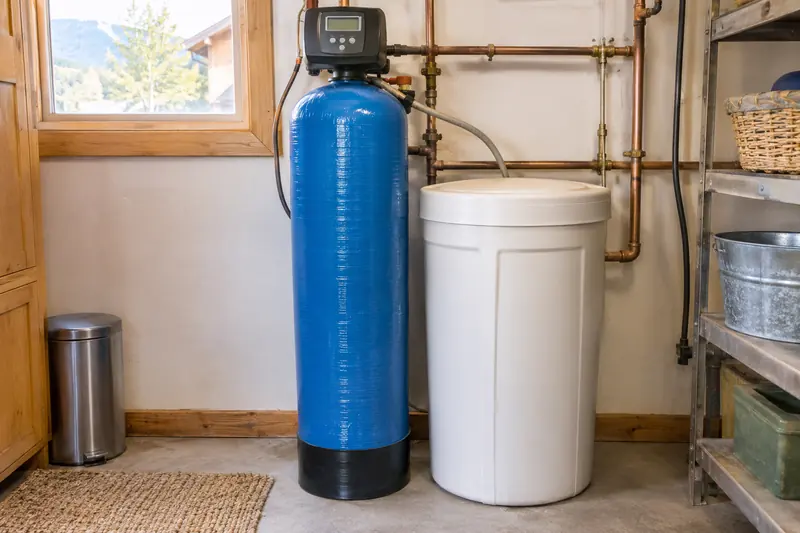
A softener deals with hardness and brings several other things to weigh. CSU Extension says softeners swap calcium and magnesium for sodium, which is a concern on low-salt diets, and that softened water "should not be used for gardens, lawns or plants." The Montana State Extension sheet hosted by CSU adds that softening doesn't lower total dissolved solids, and that softening with sodium can make water more corrosive.
Sodium before any softener already differs a good deal across the valley. Ute reported 17.8 ppm for 2025 and Clifton 72.2 ppm for 2025, while CSU gives a recommended sodium limit of 20 ppm. Anyone on a salt-restricted diet should raise this with a doctor before softening.
| Concern | What the sources say | What to do about it |
|---|---|---|
| Sodium in drinking water | Softeners add sodium | A bypassed drinking tap, or reverse osmosis at the tap |
| Garden and lawn | Don't water with softened water | Keep outdoor taps on the hard line |
| Septic in clayey soils | Sodium can raise drainfield failure risk, and salt discharge may disrupt settling | Consider potassium; see below |
| Corrosion | Softening with sodium can raise it | Ask the seller or installer about your pipes |
4-2.3 Will a softener hurt your septic system?
It can, on clay ground. The same Montana State sheet says that in clayey soils, sodium from recharge can raise drainfield failure risk, and that salt discharge may disrupt settling in the tank. It names potassium as an alternative. Slope ground is covered in §6-1, so ask where the recharge will go before anyone installs one, and read the septic care notes in §6-3.
4-2.4 How do you decide?
Go through the numbers first and the shopping last. Scale you can live with may not be worth the trade-offs, and this list is practical advice rather than a rule.
- Get your number from your provider's report, or a kit or lab on a well.
- Convert it to grains: mg/L divided by 17.1.
- Look at the high month, not only the average.
- Note your sodium figure and any low-salt diet at home.
- Note if the house is on septic and clay.
- Plan which taps stay unsoftened: kitchen drinking tap, garden hoses.
- Ask the seller how the recharge discharges, and whether potassium suits it.
Moving picture for §4-2
Water Softening, posted by Penn State Extension. From Penn State Extension. One slip: it calls calcium and magnesium ions negative, and they are positive. The still picture sits on this site; nothing comes from YouTube until you press Play.
Linked from this manual
- SoftPro Eco water softener. A household water softener. This manual’s team is connected with SoftPro Water Systems.
- SoftPro Eco well water softener. A softener sold for well water. Test the well first. This manual’s team is connected with SoftPro Water Systems.
- Hardness, iron and pH field kit. A field kit for reading those three numbers yourself. It doesn't replace a certified lab for coliform or selenium. This manual’s team is connected with Quality Water Treatment.
Also asked
Is 128 mg/L hard water?
Yes, by the USGS classes, which put 121 to 180 mg/L as hard. Other sources draw the lines differently, so this manual uses USGS, as Ute does.
How do I turn mg/L into grains per gallon?
Divide by 17.1. So 128 mg/L is about 7.5 gpg, and 150 mg/L is about 8.8 gpg.
Can I water the garden with softened water?
CSU Extension says it should not be used for gardens, lawns or plants. Keep hose bibs on the unsoftened line.
Does reverse osmosis replace a softener?
They do different jobs. The Montana State sheet offers reverse osmosis at the tap as a way to remove sodium from drinking water after softening, which is a single-tap job, not a whole-house one.
Where this comes from
- USGS, hardness of water: hardness classes.
- Montana State Extension sheet on corrosivity and hardness, hosted by CSU: conversion, dissolved solids, septic, potassium, corrosion, tap options.
- CSU Extension, drinking water quality: sodium swap, garden warning, 20 ppm.
- Project 7, 2025 composite water quality: 2025 hardness.
- Ute Water, 2026 monthly averages: 2026 hardness.
- Ute Water, 2025 report: sodium.
- Clifton Water District, 2026 report: sodium, no hardness figure.
Sources checked November 4, 2026.