Contents Chapter 6. Ground and pipes
Leaks you can't see
To find a water leak under a slab, first prove water is leaving with a two-hour meter reading, rule out the toilets, then hand the hunt for the exact spot to a plumber.
- Use this when
- The bill jumped, the pressure gauge falls with nothing running, or a floor or wall is damp.
- Done when
- You have a meter or gauge result written down, the toilets are ruled in or out, and any leak you can't reach is with a plumber.
- Who
- You, then a licensed plumber
Written for this manual, last checked against sources November 4, 2026. Who wrote it
6-2.1 Is water actually leaving the house?
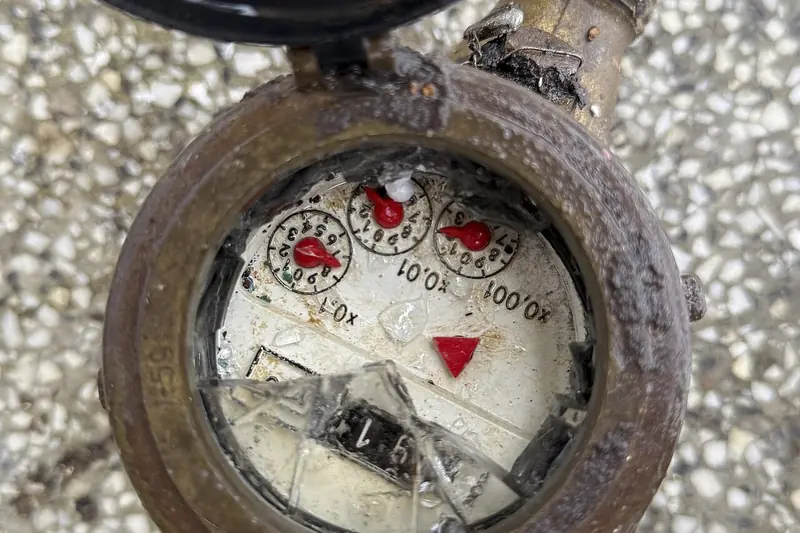
The meter answers this in two hours. EPA's test is to read the meter, use no water for two hours, and read it again. Any change suggests a leak.
Two-hour meter test
- Faucets, showers, toiletsNOT IN USE
- Washer and dishwasherOFF
- SoftenerNOT REGENERATING
- Swamp coolerWATER OFF
- Irrigation from house waterOFF
- Meter readingWRITTEN DOWN
- ClockTWO HOURS
- Second readingCOMPARE
The appliance lines in that list are practical additions, so the test isn't fooled by something running on a timer.
If water is running hard somewhere right now, skip this page and go to §E-3.
6-2.2 What if there's no meter?
On a well, the pressure gauge stands in for one. Nebraska Extension's 2012 guide, which isn't written for Colorado, says to shut water to the house and watch the gauge. A steady needle means the check valves and lines are likely sound. A falling needle means a line leak or a check valve problem. Your valves are marked in §1-2.
Leave the switch and the tank alone during this test. The same guide warns that the pressure switch is connected to electric power and could cause serious injury, and a pump that runs without stopping is its own problem (§E-5).
No source opened for this manual gives a leak test for cistern homes. The practical version is to note the level from outside, use no water for a day with no delivery due, and look again. Never open the hatch to lean in (§3-3).
6-2.3 Which toilet is running?
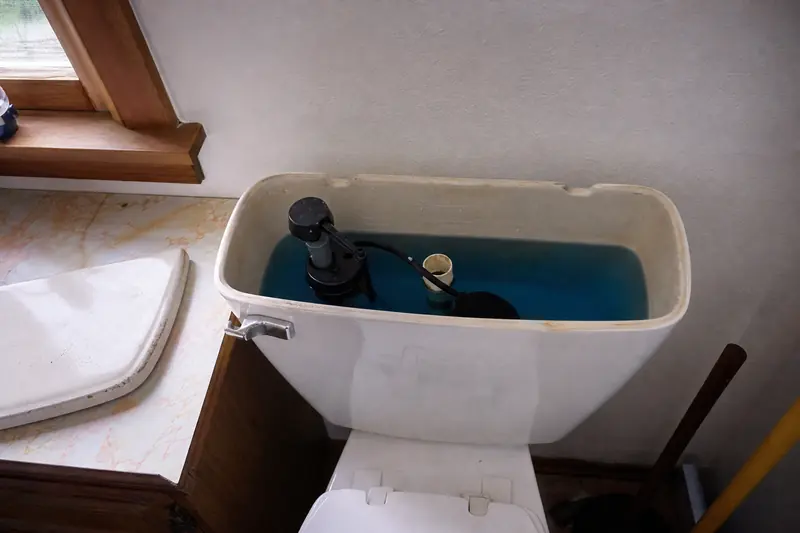
Food coloring finds it. EPA says to put coloring in the tank, and color in the bowl within 10 minutes means a leaking flapper. Clifton Water District says to wait 25 to 30 minutes, so give it at least 10 minutes, and longer is better. Flush right away afterward so the color doesn't stain.
- Add coloring to the tank of each toilet. Don't flush.
- Wait at least 10 minutes.
- Look in each bowl. Color means that toilet leaks.
- Flush. Replace the flapper or the parts the toilet's maker lists.
- Repeat the two-hour meter test to see if the toilet was the whole leak.
6-2.4 How much water is too much?
There is no single number, but EPA gives yardsticks. Use them to decide whether a bill deserves a closer look, not as a diagnosis.
| Measure | EPA's figure |
|---|---|
| Average household leaks | More than 9,300 gallons wasted a year |
| Family of four, winter use | Over 12,000 gallons a month may mean serious leaks |
| Irrigation leak of 1/32 inch | About 6,300 gallons a month |
Those figures come from EPA's Fix a Leak Week page. Swamp coolers belong on your list here. Clifton's self-audit says to look for puddles and stains at the base and on the roof, and check the supply line, float valve and reservoir. Anything on the roof means cooler power off first; the ladder and power rules are in §9-1.
6-2.5 Where a hidden leak gives itself away
No source opened for this manual sets out how to locate a slab leak, so treat this short list as practical advice. Look for a damp patch that keeps coming back, flooring that lifts, a warm spot on a slab floor, or the sound of water with everything off. None of these proves where the pipe has failed.
Swelling ground is one reason to suspect buried lines here, since expansive soils can disrupt pipelines and sewer lines (§6-1). Neither that source nor any other tells you whether it caused yours.
For a crawl space, look from the hatch with a flashlight first. There's no official check to follow here, and water changes the risk.
Linked from this manual
- Toilet parts. Replacement parts for toilets, for when the dye test points to one. This manual’s team is connected with PlumbingSupplyAndMore.
Also asked
Does a tiny change on the meter count?
EPA says any change over the two hours suggests a leak. Run the test again on another day to rule out a mistake. If it moves both times, start with the toilets.
Why does EPA's yardstick use winter water use?
Its figure for a family of four is a winter one. The practical reason is that lawn and garden watering is out of the picture then. Summer bills on the Slope carry outdoor water that can hide a leak.
Whose job is a leak between the meter and the house?
This manual has no provider-by-provider rule on that. Ask your water provider where its responsibility stops, and write the answer on your house card (§1-1).
Can I keep using the water while I wait for a plumber?
If the leak is slow and nothing is getting wet, that is your call. If water is showing inside, use the main shutoff and follow §E-3.
Where this comes from
- EPA WaterSense, Fix a Leak Week: meter test, dye test, leak yardsticks.
- Clifton Water District, indoor leak self-audit: dye test wait, evaporative cooler checks.
- Nebraska Extension G2153, 2012, not Colorado: well gauge test, pressure switch warning.
- Colorado Geological Survey, swelling soil hazard page: soil and buried lines.
- Illinois Extension, water pipes: shock risk around standing water.
Sources checked November 4, 2026.