Contents Chapter 7. Freeze protection
Heat tape and pipe insulation
Heat tape for pipes needs a certified tape, a GFCI-protected circuit, no overlaps and the maker's instructions, while insulation slows a freeze without stopping a long one.
- Use this when
- A pipe in a crawl space, outer wall or unheated space froze before or looks likely to.
- Done when
- Exposed pipe is covered, any heat tape passes the drill below, and anything electrical you doubted has gone to an electrician.
- Who
- You, then a licensed electrician for any circuit question
Written for this manual, last checked against sources November 4, 2026. Who wrote it
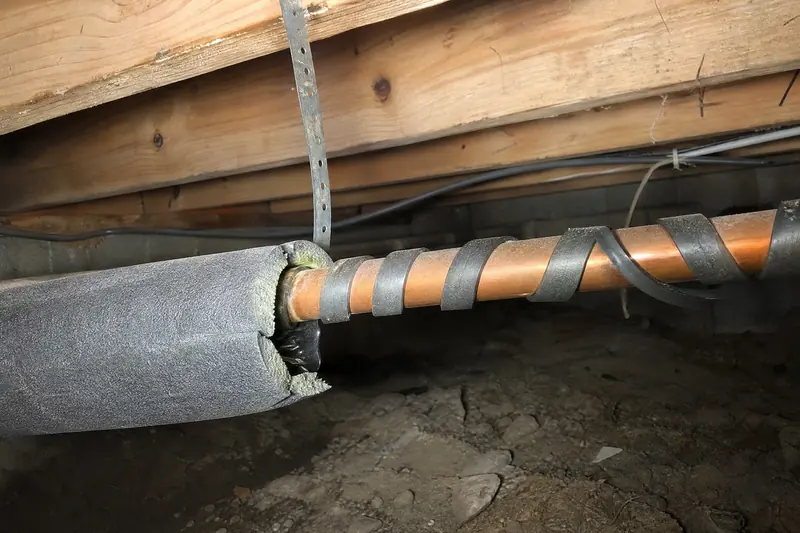
7-2.1 What can insulation do, and what can't it?
It slows heat loss, and that is all. USU Extension says insulation will not protect pipes from prolonged freezing temperatures without a heat source or water flow. In a house that holds heat that may be enough. In a place the heat never reaches, it buys time.
IBHS says to insulate pipes in attics, crawl spaces and exterior walls and to caulk gaps. A draft on a pipe can undo the cover, so Illinois Extension has you seal air leaks where pipes run. DOE's page on insulation values is gone, so this manual gives no R-value. Follow the label on the product.
- Fix any leak first, as USU says to. Insulation hides drips.
- Measure the pipe, so the cover fits its size.
- Cover the fittings as well as the straight runs. USU names both.
- Close the seams with what the product's maker specifies.
- Stay clear of flues, vent pipes and anything hot. Ask a technician about clearances you can't read off a label.
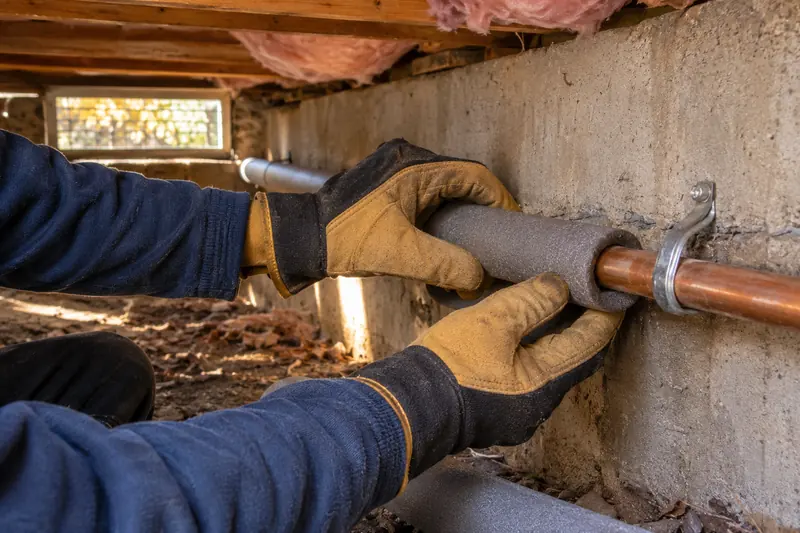
7-2.2 When is heat tape worth the risk?
Use it where insulation alone has already failed, or where a pipe can't be moved into the heat. That judgment is practical advice. The risk is on the record: in January 1996 CPSC tied about 1,500 fires, 10 deaths and 100 injuries a year to faulty heat tapes. Those numbers are decades old, and the sources behind this manual hold no newer count.
7-2.3 CPSC's rules, with their dates
These are old statements, so where the maker's instructions for your tape are stricter, follow the maker.
| Topic | What it said | Year |
|---|---|---|
| Certification | Use UL, CSA or FMRC certified tape | 1996 |
| Old tape | Replace uncertified tapes over 3 years old | 1996 |
| Circuit | Plug into a GFCI-protected circuit | 1996 |
| Overlap | Don't lap it over itself unless the maker permits | 1989, 1996 |
| Pipe size | Buy tape labeled for the pipe size | 1989 |
| Under insulation | Don't cover it unless the maker advises | 1996 |
| Insulation type, if advised | Non-flammable such as fiberglass, never foam or vinyl | 1996 |
| Over insulation | Don't wrap tape over thermal insulation | 1989 |
| Thermostat | Check whether it must sit against the pipe | 1996 |
The sources are CPSC's 1996 release and 1989 release. Illinois Extension also says heat tape should be UL approved.
The two insulation rows trip people up. A foam sleeve over heat tape is the combination CPSC warns against, and many pipes already wear foam sleeves. If yours do, read the tape's instructions before you touch it, and ask a plumber or electrician if they don't settle it.
7-2.4 How do you check tape you already have?
Unplug it and look along its whole length every fall. CPSC titled its 1989 release around inspecting heat tapes as you winterize. Cracks and scorch marks are practical signs of a tape that is done.
Heat tape check, power unplugged
- Certification labelUL, CSA OR FMRC
- Uncertified and over 3 years oldREPLACE
- Cracks, scorching, brittle spotsREPLACE
- Laps over itselfONLY IF MAKER ALLOWS
- Foam or vinyl over the tapeREMOVE OR ASK
- Fuel lines, gutters, drivewaysNEVER ON THESE
- Thermostat positionAS THE MAKER SAYS
- OutletGFCI PROTECTED
- Extension cordsASK AN ELECTRICIAN
Linked from this manual
- Pipe insulation covers. Covers for exposed water pipe in crawl spaces, attics and outer walls. This manual’s team is connected with PlumbingSupplyAndMore.
Also asked
Can I put foam pipe insulation over heat tape?
CPSC's 1996 guidance says never foam or vinyl. If the maker advises covering the tape at all, CPSC names non-flammable material such as fiberglass. No maker's advice means no cover.
Is heat tape a fix for a pipe that froze last year?
It is one option. Sealing drafts and insulating come first, since they reduce what the tape has to do. Moving the pipe into heated space is a plumber's question and can end the problem.
How old is too old?
CPSC's line is uncertified tape more than 3 years old: replace it. For certified tape, go by the maker's instructions and what you see during the fall check. If you can't read the label, treat it as uncertified.
Does heat tape work on a buried or well line?
No source opened for this manual covers that. Ask your pump installer or a plumber, and don't improvise with tape meant for indoor pipe.
Where this comes from
- CPSC release, January 22, 1996: fire figures, certification, age, GFCI, overlap, insulation, thermostat, places never to use it.
- CPSC release, 1989: over-insulation, overlap, pipe size labeling.
- CPSC release, February 19, 2026: portable heater clearance.
- USU Extension, frozen pipes: limits of insulation, covering fittings, fixing leaks first.
- IBHS, winter ready: where to insulate, caulking.
- Illinois Extension, water pipes: UL approval, air leaks.
Sources checked November 4, 2026.