Contents Chapter 5. Ditch and irrigation water
Stop and start an irrigation line
To winterize an irrigation line in Colorado, follow your ditch company's shutdown notice, drain or blow out the line within CSU's pressure limits, keep compressed air off backflow devices, and open valves slowly in spring.
- Use this when
- The season is closing, a shutdown notice has gone out, or you are bringing a line back on in spring.
- Done when
- The line holds no water for winter, devices are protected, and in spring the valves are open with no hammer or leaks.
- Who
- You, or a sprinkler pro for the blowout, and a certified technician for device tests
Written for this manual, last checked against sources November 4, 2026. Who wrote it
5-2.1 When does the water actually stop?
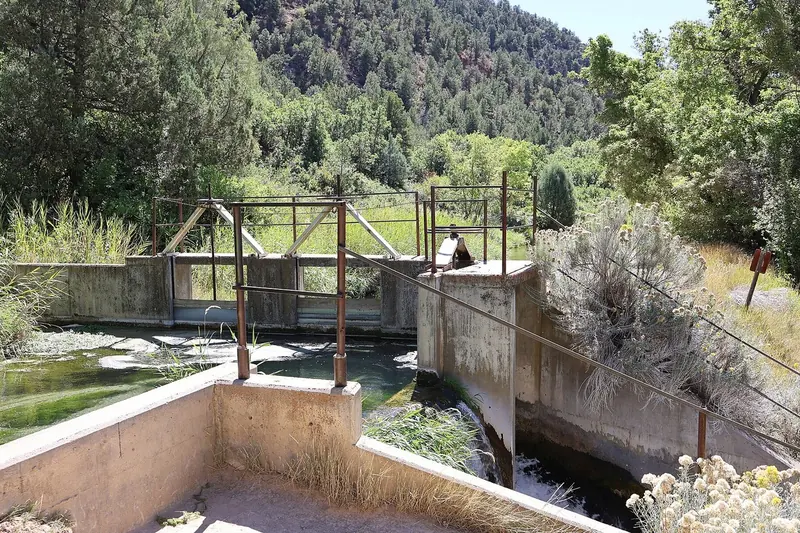
Your company's notice sets the date, and it isn't the same each year. 2026 shows why. UVWUA posted a notice dated November 1, 2026 saying the Gunnison Tunnel was shut down for the season and ditch riders were winterizing. GVWUA's board directed its 2026 season to end November 5, after deliveries stopped in early September, resumed September 17, and restrictions lifted October 12.
The year was abnormal in other ways too. UVWUA allowed 50% of allotments, according to a Daily Sentinel story from July 15, 2026 posted on its site. Neither association publishes fixed start or end dates this manual could find, so go by each year's notice. Grand Valley Irrigation Company's own dates couldn't be confirmed, so ask it directly.
GVWUA also says that during shutdowns you don't draw water until a ditch rider or official notice allows it. Treat that as the habit for any ditch.
5-2.2 Is first freeze earlier than shutdown?
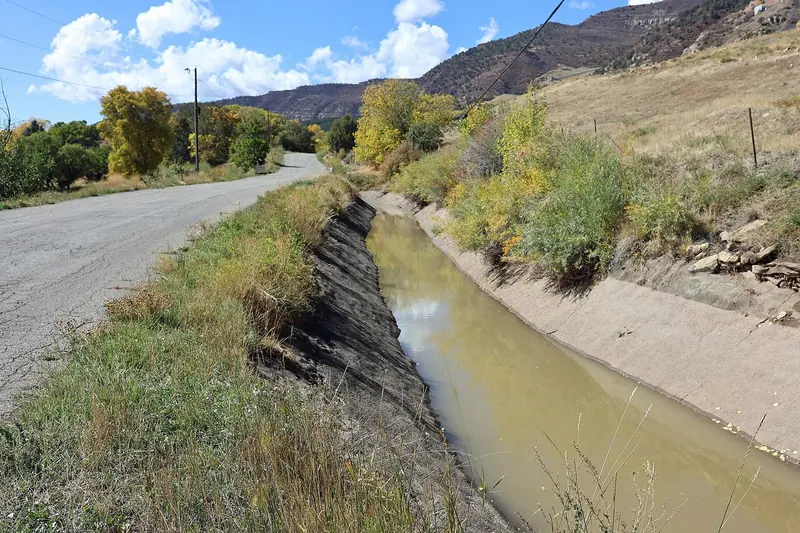
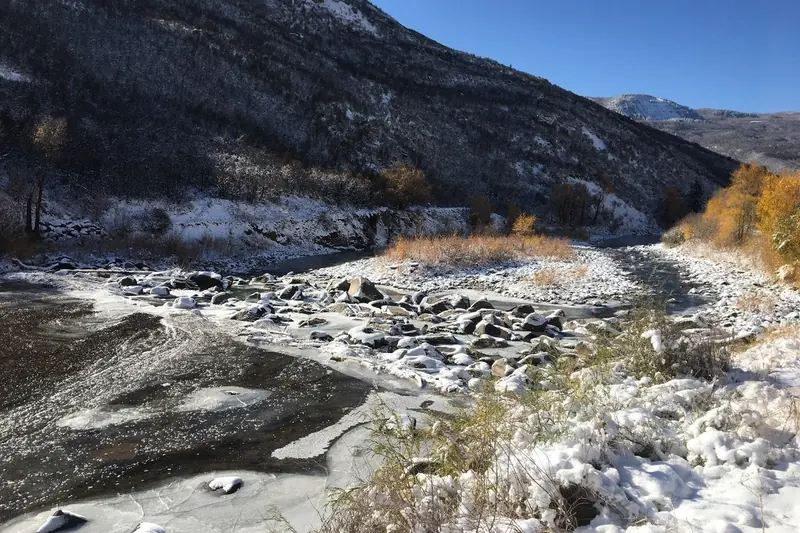
It can be, which is why a line can't always wait for the notice. The Colorado Climate Center puts Palisade's average first freeze at October 26, the latest in the state, and the 10th percentile at mid-October in the Grand Valley. Palisade's earliest since 1991 came October 4, 2016. Other towns differ (§1-3). So close and drain what you can on exposed lines once freeze comes into the forecast, and take the rest down after the notice. That timing is practical advice, not a source's rule.
5-2.3 How do you shut a line down for winter?
Stop the water, drain what will drain, then blow out what won't if your system is built for it. Blowout numbers come from CSU Extension and are written for home sprinkler systems. If you run a ditch-fed line with a pump, also check your pump's maker's instructions. Your pump is your own responsibility on GVWUA, as §5-1 notes.
- Read your company's notice and stop drawing water.
- Switch the pump off at its switch or breaker, if you have one.
- Close the supply valve and open low-point drains. Let the water leave the line.
- Protect backflow devices before any air goes in (see the warning below).
- Blow out one zone at a time within the limits in the table, wearing eye protection.
- Leave pressure vacuum breaker (PVB) ball valves and test cocks half-open for winter.
| Item | Limit |
|---|---|
| Air pressure | 40 to 80 psi |
| Rigid PVC | 80 psi at most |
| Polyethylene pipe | 50 psi at most |
| Air volume | CFM equals zone GPM divided by 7.5 |
| Cycles | Two short cycles per zone |
| Dry zone | Don't blow it again, because friction heats the pipe |
5-2.4 What is the right way to bring water back in spring?
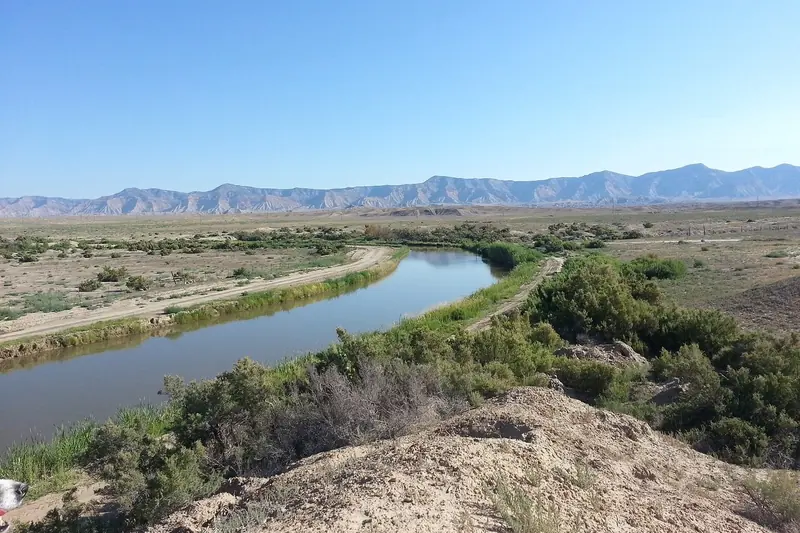
Slowly, with everything closed first. CSU Extension says to close test cocks and ball valves before water comes on, and open ball valves slowly to avoid water hammer. Backflow prevention is required when the system connects to domestic water.
Spring start
- Company noticeREAD, DELIVERY CONFIRMED
- Assessment or feesPAID BEFORE SEASON
- Water orderIN ON TIME
- Drains and low pointsCLOSED
- Test cocksCLOSED
- Ball valvesCLOSED, THEN OPEN SLOWLY
- Line and fittingsWALK FOR LEAKS
- Backflow deviceTESTED THIS YEAR
On GVWUA, assessments must be paid before the season and orders go in two days ahead, as noted in §5-1. A leak you can't explain goes to §6-2. EPA says a 1/32-inch irrigation leak wastes about 6,300 gallons a month, so a slow drip at a joint isn't nothing.
Also asked
What day should I blow out my sprinklers on the Grand Valley?
No source gives a fixed day. Watch your company's notice and the forecast, since Palisade's first freeze averages October 26 and has come as early as October 4 since 1991.
Do I need a compressor?
Only if your line won't drain by gravity. CSU sizes the air by zone: CFM equals GPM divided by 7.5, within the pressure limits above. You can hire this out.
Why can't I blow air through the backflow device?
CSU says heat can melt its seals, on a PVB or RP device. Route the air downstream of the device as its installer or a sprinkler pro directs.
Why is 2026 different from last year?
It was an abnormal year. UVWUA allowed 50% of allotments, and GVWUA paused and resumed deliveries. Don't carry 2026 dates forward.
Where this comes from
- UVWUA, system updates: notice dated November 1, 2026.
- GVWUA: 2026 season dates, no drawing during shutdowns.
- Daily Sentinel story, July 15, 2026, posted by UVWUA: 50% of allotments.
- Colorado Climate Center, first fall freezes: Palisade freeze dates, published 2024.
- CSU Extension, preparing your sprinkler system for winter: blowout limits, device warnings, spring start.
- CSU Extension, backflow prevention devices: device placement and certification.
- EPA WaterSense, Fix a Leak Week: irrigation leak figure.
Sources checked November 4, 2026.