Contents Chapter 6. Ground and pipes
Septic on Western Slope ground
A septic system permit in Colorado comes from your local public health agency or the office it designates, and Regulation 43 as published says you need it before installing, altering or repairing a system.
- Use this when
- You own, are buying or are about to change a septic system, or its inspection and pumping dates are unknown.
- Done when
- You know which office holds your permit, the next inspection and pumping dates are on your house card, and the tank lids are shut.
- Who
- You, then a licensed pumper and the county's septic office
Written for this manual, last checked against sources November 4, 2026. Who wrote it
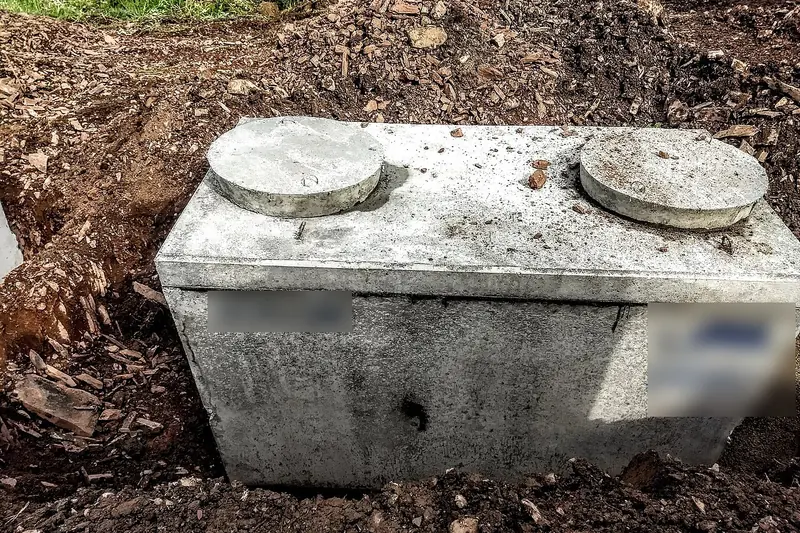
6-3.1 Who issues the permit, and what does the state require?
Your local public health agency does, or the office it has designated. Regulation 43 as published says to get the permit before installing, altering or repairing a system. A permit expires one year after issue if construction hasn't started, and final approval needs an inspection before backfill.
The same rule says an owner of a noncompliant system must apply for a repair permit within two business days of the agency's notice. Site work has four parts: preliminary investigation, reconnaissance, a detailed soil investigation and a report with site plan. The wording here comes from a law publisher's copy of the regulation, because the state health department's pages couldn't be opened.
| County | Who runs septic | What is confirmed |
|---|---|---|
| Mesa | Community Development, by designation of the Public Health Board | Regulation effective 7-29-2024, for systems up to 2,000 gallons a day |
| Delta | Not confirmed | The county's pages couldn't be opened |
| Montrose | Not confirmed | The county's pages couldn't be opened |
We couldn't open the Delta County or Montrose County pages when this was last checked, so ask each office directly. Ask for the current septic regulation by date, whether it has changed lately, and whether engineers must design new systems.
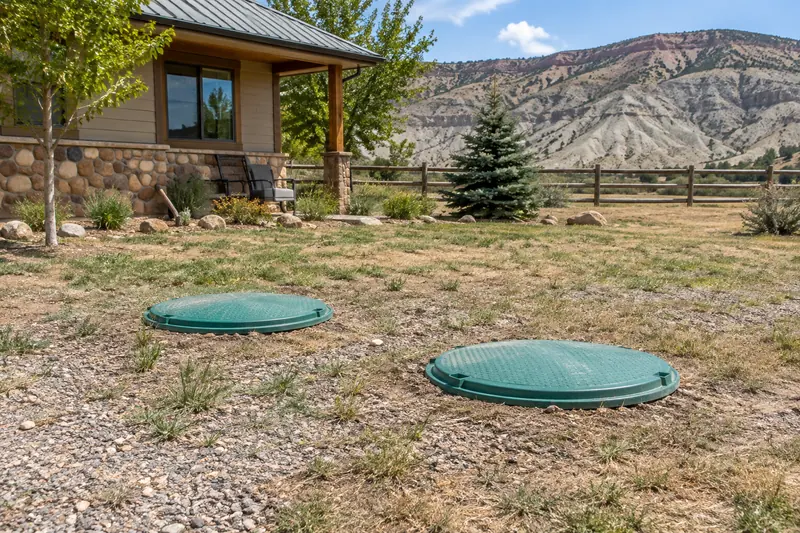
6-3.2 What Mesa County says
Mesa's 2024 regulation covers unincorporated areas and municipalities. It states that "No inspections for transferring of title or plumbing is required." Permit applications can't be transferred, and repair permits run 180 days.
It also says no permit goes to a site within a special service district and within 400 feet of sewer, with exceptions. Read the document if you are close to a sewer line. The county's Septic Department issues permits and clearances, the Building Department inspects installation, and pumpers must be licensed.
6-3.3 Is an inspection required when a house sells?
That depends on the county. Regulation 43 says a local board of health may, but need not, require inspection at sale or title transfer. Where it is required, inspectors are certified and acceptance lasts until closing or 12 months at most. Mesa says no. For Delta and Montrose, ask before you sign anything.
6-3.4 How often should a tank be pumped?
EPA says to have the system inspected at least every three years and pump household tanks every three to five years, and to inspect yearly if the system has pumps or floats. The pumper decides by measuring. EPA's trigger is scum within 6 inches of the outlet, sludge within 12 inches, or the two together over 25% of the liquid depth.
The septic owner's round
- DrainfieldNO CARS, NO PAVING
- Trees and vegetable bedsNOT ON THE FIELD
- Roof drains, sump pumpsAWAY FROM THE FIELD
- Tank lidsSHUT, STAND CLEAR
- Chlorinated well waterNOT DOWN THE DRAIN
- Last pumping dateON THE HOUSE CARD
The drainfield lines are EPA's. The chlorine line is Mesa County's warning for shock chlorination (§2-3). Softeners matter too: a Montana State Extension sheet says sodium from recharge can raise drainfield failure risk in clayey soils (§4-2, §6-1).
6-3.5 Why no one goes in a tank
Septic tank gases have killed people, and rescuers have died with the first victim. EPA says tanks produce hydrogen sulfide and methane, and NIOSH lists septic tanks as confined spaces. NIOSH records a July 16, 1986 case: a worker entering a tank to clean it collapsed, two who went in after him also died, and all three were dead when removed.
If someone is down at a tank
- Going in after themNEVER
- 911CALL NOW
- Everyone elseKEEP BACK FROM THE OPENING
- Tell the dispatcherSEPTIC TANK, GASES
Moving picture for §6-3
Are You Septic Smart? The Do's and Don'ts of Protecting This Silent Partner, posted by NHDES. From New Hampshire's environmental agency, with that state's licensing and 2019 prices. Tank lids stay shut; nobody leans into a septic tank. The still picture sits on this site; nothing comes from YouTube until you press Play.
Also asked
Can I repair my own drainfield?
Regulation 43 ties repair to a permit, so start with the permit office, not a shovel. Ask what the office requires of the person doing the work. Call 811 before anyone digs.
Do Mesa County's rules apply inside Grand Junction?
Mesa's regulation says it covers municipalities as well as unincorporated areas, for systems up to 2,000 gallons a day. A property near sewer has its own limit. Ask the Septic Department about your address.
I am buying a house with an old system and no paperwork. What do I do?
Ask the county's septic office for what it holds on the address. Have the system inspected and pumped by someone licensed where that applies, and read the permit rule before planning any change. Put what you learn on your house card (§1-1).
Do trees really matter on a drainfield?
EPA lists trees and vegetable gardens as things to keep off it, along with parking, driving, concrete and asphalt. Mark the field on your house card so a later owner or gardener knows.
Where this comes from
- Colorado Regulation 43.4, law publisher's copy: permit, expiry, final inspection, sale inspection, repair notice (published copy of the regulation).
- Colorado Regulation 43.5, law publisher's copy: site and soil evaluation (published copy of the regulation).
- Mesa County, on-site wastewater regulation, effective 7-29-2024: designated office, size limit, title transfer, sewer distance, repair permits.
- Mesa County Septic Department: who issues, who inspects, licensed pumpers.
- Mesa County, shock chlorination procedure: chlorinated water and septic.
- EPA, how to care for your septic system: inspection, pumping, drainfield care.
- EPA, septic tank additives: tank gases.
- NIOSH publication 87-113: confined spaces, 1986 deaths.
- Montana State Extension sheet on a CSU-hosted site, 2012: softener sodium and clay drainfields.
Sources checked November 4, 2026.