Wood stoves and chimneys
Wood stove chimney cleaning and inspection should happen every year by a professional, and between visits your job is dry wood, cool ash, three feet of clearance and working alarms.
- Use this when
- You burn wood in a stove, insert or fireplace, or just bought a house that has one.
- Done when
- The chimney has been inspected this year, the wood reads dry, the ash can is outdoors, and alarms are tested.
- Who
- You for wood, ash and alarms; a chimney professional for the chimney, the liner and the install
Written for this manual, last checked against sources November 4, 2026. Who wrote it
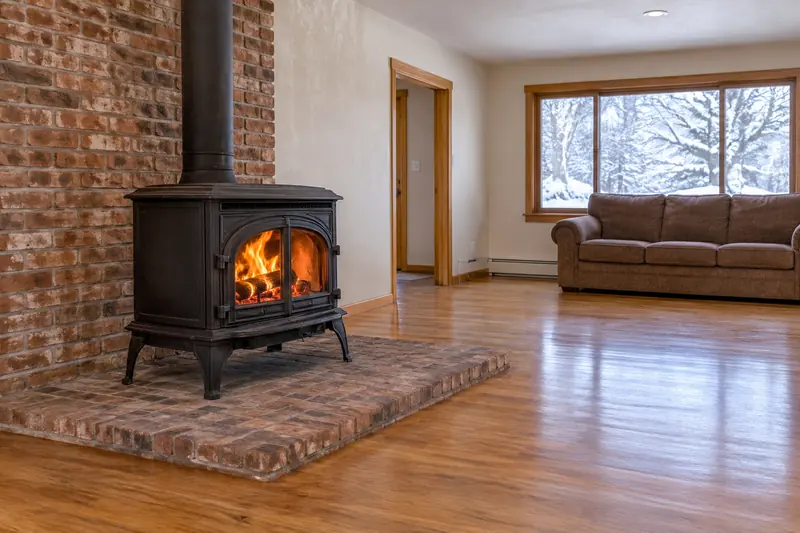
Before the first fire of the season
- Stove and chimneyINSPECTED THIS YEAR
- Newly split face of a test logUNDER 20% ON A METER
- Things that burn near the stove3 FEET BACK
- CO and smoke alarmsTESTED
- Ash containerMETAL, LIDDED, OUTDOORS
- Everyone at homeKNOWS §E-6
8-2.1 How often should a chimney be cleaned?
Once a year is the figure these agencies give. The U.S. Fire Administration says to have heating equipment and chimneys cleaned and inspected yearly by a professional. CDC gives the same yearly check as a carbon monoxide precaution, and EPA's Burn Wise program says to inspect appliance and chimney annually. EPA stopped updating that program on October 30, 2025, so read those pages as an archive.
The reason is creosote, which a Colorado fire district calls highly flammable. An EPA safety kit, citing the National Fire Protection Association, names a dirty chimney as the leading factor in home heating fires, at 30 percent.
This manual gives no steps for sweeping, because chimney and flue work belongs to a professional. Ask what certification the person holds and what they will show you afterward. If a chimney fire ever starts, stop reading here and go to §E-6.
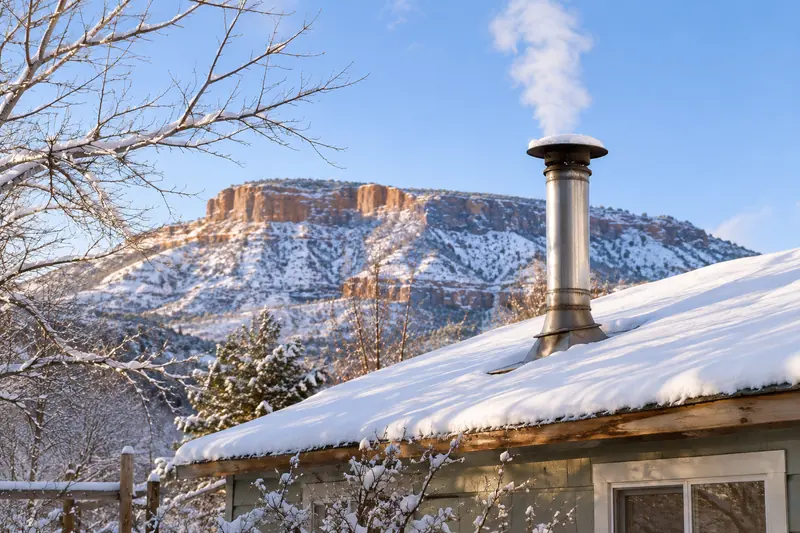
8-2.2 What makes firewood ready to burn?
Moisture decides it. EPA says wood burns best below 20 percent moisture, and a meter settles the question. Split a log and test the newly split face, as EPA's kit says.
| Item | Target |
|---|---|
| Moisture on a meter | Below 20 percent |
| Softwoods, seasoning time | Six months |
| Hardwoods like oak, seasoning time | At least 12 months |
| Stacking | Off the ground, top covered only |
Store it off the ground and cover the top only, which leaves the sides open to dry air. Never burn garbage, plastic, treated lumber or driftwood. Old fence posts and scrap from a remodel can be treated, so leave out anything you can't identify.
8-2.3 Ash, clearance and alarms
A short routine carries most of the daily safety.
- Open the stove door slowly.
- Take ash out only after it has cooled.
- Put it in a covered metal container stored outdoors on a nonflammable surface. Never a cardboard box, and never on a wood deck.
- Keep anything that can burn at least 3 feet from the stove.
- Keep alarms on every floor and outside each bedroom, and test them monthly, as CPSC said in February 2026.
8-2.4 Sizing a stove, and what the label means
Bigger isn't better. CSU Extension says oversizing leads to smoldering and more emissions, so ask a professional to size any new stove to the room or house. The same page puts wood stoves at 63 to 78 percent AFUE and pellet stoves at up to about 80 percent.
Look for the EPA certification label on anything you buy. EPA's kit says certified stoves and inserts cut air pollutants 70 percent compared with older models, and it says to have one installed by a certified professional. This manual could not confirm Colorado's rule on selling or buying new stoves, so ask the dealer in writing.
8-2.5 Can a burn advisory stop your stove?
Mesa County's advisory text is narrower than people assume. A No Burn Advisory from Mesa County Public Health prohibits all open burning, and that page doesn't mention stoves. In a May 14, 2025 advisory the county recommended that residents with wood stoves or fireplaces "limit their use," which is a request and not a ban.
The state's high-pollution-day limits, in an archived and undated copy of Colorado Regulation 4, cover only parts of the Denver metro area below 7,000 feet. This manual confirmed no statewide no-burn rule for stoves on the Slope. CSU does warn that certain Colorado locations may limit wood or pellet stoves, so ask your county and any homeowners' association.
Moving picture for §8-2
Tips for a Long Lasting Burn, posted by Idaho Department of Environmental Quality. From Idaho's environmental agency. It doesn't cover sweeping, ash or CO alarms, and your stove's manual decides air settings. The still picture sits on this site; nothing comes from YouTube until you press Play.
Linked from this manual
- Chimney liners. Liner parts and venting, for comparing with what a chimney professional proposes. Fitting a liner is that professional's job. This manual’s team is connected with PlumbingSupplyAndMore.
Also asked
Do I need a permit to put in a wood stove?
Ask before you buy. Mesa County's sample inspection card, marked as an internet example from 2023, lists a wood-burning appliance inspection, but it doesn't say what triggers a permit. We couldn't open the Delta and Montrose county offices' pages when this was last checked, so ask them directly. §10-1 lists what is known.
Can I reline my own chimney?
This manual says no. A liner is part of the flue, and a mistake there can show up as fire or carbon monoxide. Have a chimney professional choose and fit it.
Can I use the stove again after a chimney fire?
Not until a professional clears it, as one Colorado fire district says. Call the fire department even if it seems out. §E-6 has the drill.
Is a moisture meter worth buying if I buy seasoned wood?
Yes. "Seasoned" on a sale is a claim, and EPA's test on a split log is quick. A reading above 20 percent means that load needs more drying time before you burn it.
Where this comes from
- EPA Burn Wise, best wood-burning practices (archived program, not updated since October 30, 2025): moisture, seasoning, stacking, ash, certification label.
- EPA Burn Wise, facts, figures and safety tips (same archive notice): annual inspection, ash timing, stove door, alarm placement.
- EPA Burn Wise safety kit, posted 2016: testing a split face, seasoning times, what not to burn, 70 percent, 30 percent via NFPA.
- U.S. Fire Administration, heating fire safety: yearly cleaning and inspection, 3-foot clearance.
- CDC, carbon monoxide: yearly chimney check.
- EPA, carbon monoxide and indoor air: wood stoves as a source.
- CPSC, February 19, 2026 release: monthly alarm tests.
- Crystal Lakes Fire, a Colorado fire district, chimney fires: creosote, calling even if it seems out.
- Livermore Fire, a Colorado fire district, chimney fires: no reuse until a professional clears it.
- CSU Extension, Heating Colorado Homes: oversizing, AFUE ranges, local limits.
- Mesa County Public Health, burn permits: what an advisory prohibits.
- Mesa County, advisory of May 14, 2025: recommendation for stove owners.
- Colorado Regulation 4, archived EPA copy, undated: scope of high-pollution-day limits.
- Mesa County, sample inspection card, 2023: wood-burning appliance inspection listed.
Sources checked November 4, 2026.