Contents Chapter 7. Freeze protection
The fall freeze check
To prevent frozen pipes in Colorado, drain the outside water, insulate what is exposed, seal drafts around pipes and keep the heat at 55°F or more, finishing before the first freeze arrives.
- Use this when
- It is September or early October, or you have just bought the house.
- Done when
- Every line of the drill is done, the main shutoff has been tested, and the date is on your house card.
- Who
- You, then a heating technician for the yearly service
Written for this manual, last checked against sources November 4, 2026. Who wrote it
7-1.1 When does the check have to be finished?
Before your first freeze, and that comes earlier than people remember. The Colorado Climate Center's September 2024 review gives these first fall freeze dates for the Grand Valley, and says the average first freeze has moved over a week earlier since 1980.
| Where | Date |
|---|---|
| Palisade, average | October 26, latest in the state |
| Other Grand Junction stations, average | Late October |
| Grand Valley, 10th percentile | Mid-October |
| Palisade, earliest since 1991 | October 4, 2016 |
That source gives no dates for Delta, Montrose, Paonia or Cedaredge. Palisade is the state's latest, so assume yours is earlier. The practical answer is to finish by the end of September. January lows by station are in §1-3.
7-1.2 The check, in order
Start outside and work in. That way the water you shut off now can't surprise you in January.
Fall freeze check
- HosesOFF AND DRAINED
- Valves to outside faucetsOFF
- Outside faucetsDRAINED, INSULATED
- Irrigation lineSHUT DOWN, SEE §5-2
- Swamp coolerSEE §9-2
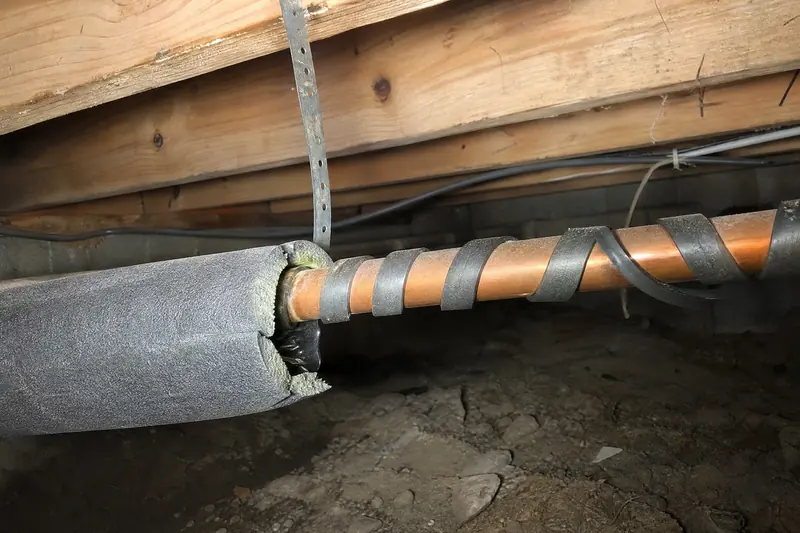
- Pipe in attic, crawl, outer wallsINSULATED
- Gaps where pipes runSEALED
- Crawl-space ventsCOVERED, SEE WARNING
- Main shutoffTESTED, SEE §1-2
- Heating systemSERVICED THIS YEAR
- Thermostat55°F OR HIGHER
- CO and smoke alarmsTESTED
Most of this list comes from IBHS: insulate pipes in attics, crawl spaces and exterior walls, caulk gaps, cover ventilated crawl spaces, shut off outdoor faucet valves, insulate the faucets, drain hoses, shut down irrigation and have the heating serviced each year. Illinois Extension adds disconnecting hoses and draining the outside faucets. The alarm line is CPSC's monthly test.
7-1.3 Do you have frost-proof faucets?
Probably not on an older house. IBHS says homes built before 2010 typically lack them. That is a national statement, so look at yours instead of guessing.
If you can't tell, treat every outside faucet as the ordinary kind. Shut its inside valve if it has one, open the faucet to let it drain, and cover it. A faucet with no inside valve is a question for a plumber, and §1-2 will help you find what shuts it off.
7-1.4 What should the house do on the coldest nights?
Keep heat moving to the pipes. IBHS sets a 55°F thermostat minimum, cabinet doors open and faucets dripping in extreme cold. A drip costs water, which matters more on a cistern than on town supply, so keep it to the taps on outer walls. That last point is practical advice, not IBHS's.
Insulation has limits. USU Extension says it will not protect pipes from prolonged freezing temperatures without a heat source or water flow, and says to fix leaks before you cover anything. See §7-2 for heat tape.
Rooms you don't use still count. CSU says unoccupied areas should be heated to well above freezing. Leave doors to them open if the heat comes from elsewhere in the house, which is another practical point.
Moving picture for §7-1
Winter Weather Quick Tips: Protecting Your Pipes, posted by WSSC Water. From a Maryland water utility, whose winters are milder than the high country's. A 55-degree setting and a trickle may not be enough in deep cold. The still picture sits on this site; nothing comes from YouTube until you press Play.
Linked from this manual
- Angle stop valves. The small shutoffs under sinks and toilets, for one the check shows is seized or weeping. This manual’s team is connected with PlumbingSupplyAndMore.
Also asked
Is fall really the right time, or can I wait for the forecast?
Wait and you may lose the date to an early freeze, as in Palisade on October 4, 2016. The check doesn't need cold weather. Doing it in September is the practical answer.
Who else in the house should know the main shutoff?
USU Extension says to teach adults and older children where it is and how to use it. Walk them to it during the check. A label on the valve helps someone stressed.
Does a heated house need any of this?
Yes. The pipes at risk are the ones at the edge of the heat: outer walls, crawl spaces, attics and outside faucets. IBHS lists burst frozen pipes as a common cause of winter water damage.
What frost depth should buried lines have here?
This manual has no confirmed figure for any of the three counties. Ask the county building office, or your plumber, before relying on a depth.
Where this comes from
- Colorado Climate Center, first fall freezes, September 2024: freeze dates and the trend since 1980.
- IBHS, winter ready: the outdoor, crawl-space and heating items, faucets before 2010, burst pipes as a common cause.
- IBHS, before the event: 55°F, cabinets, dripping.
- Illinois Extension, water pipes: hoses and outside faucets.
- USU Extension, frozen pipes: limits of insulation, fix leaks first, teach the shutoff.
- CSU Extension, heating Colorado homes: combustion air, unoccupied areas.
- CPSC release, February 19, 2026: monthly alarm test.
- CDC, carbon monoxide: yearly service by a qualified technician.
Sources checked November 4, 2026.